Fast Image AI Delivers Instant Multi-Directional Design Exploration
Most creators, product specialists, and e-commerce operators face a typical efficiency bottleneck: creative conception only takes a few minutes, and rough sketches can clarify core ideas, yet visual creative validation often consumes hours. Simple hand-drawn sketches serve merely as personal references; their crude visuals and lack of detail make them unfit for team discussions, client presentations, and scheme comparisons. Traditional manual rendering workflows involve cumbersome procedures with extremely high iteration and trial-and-error costs, leaving countless promising creative ideas stuck in the pre-validation stage and delayed from implementation.
Targeting this industry pain point, Fast Image AI’s sketch-to-image function focuses on lightweight creative validation scenarios. It cuts down complex design operations and lengthy rendering pipelines, quickly converting hand-drawn sketches into renderings of diverse styles. This empowers creators to efficiently test creative concepts, compare multiple design options, and filter design directions, shortening the early creative iteration cycle.
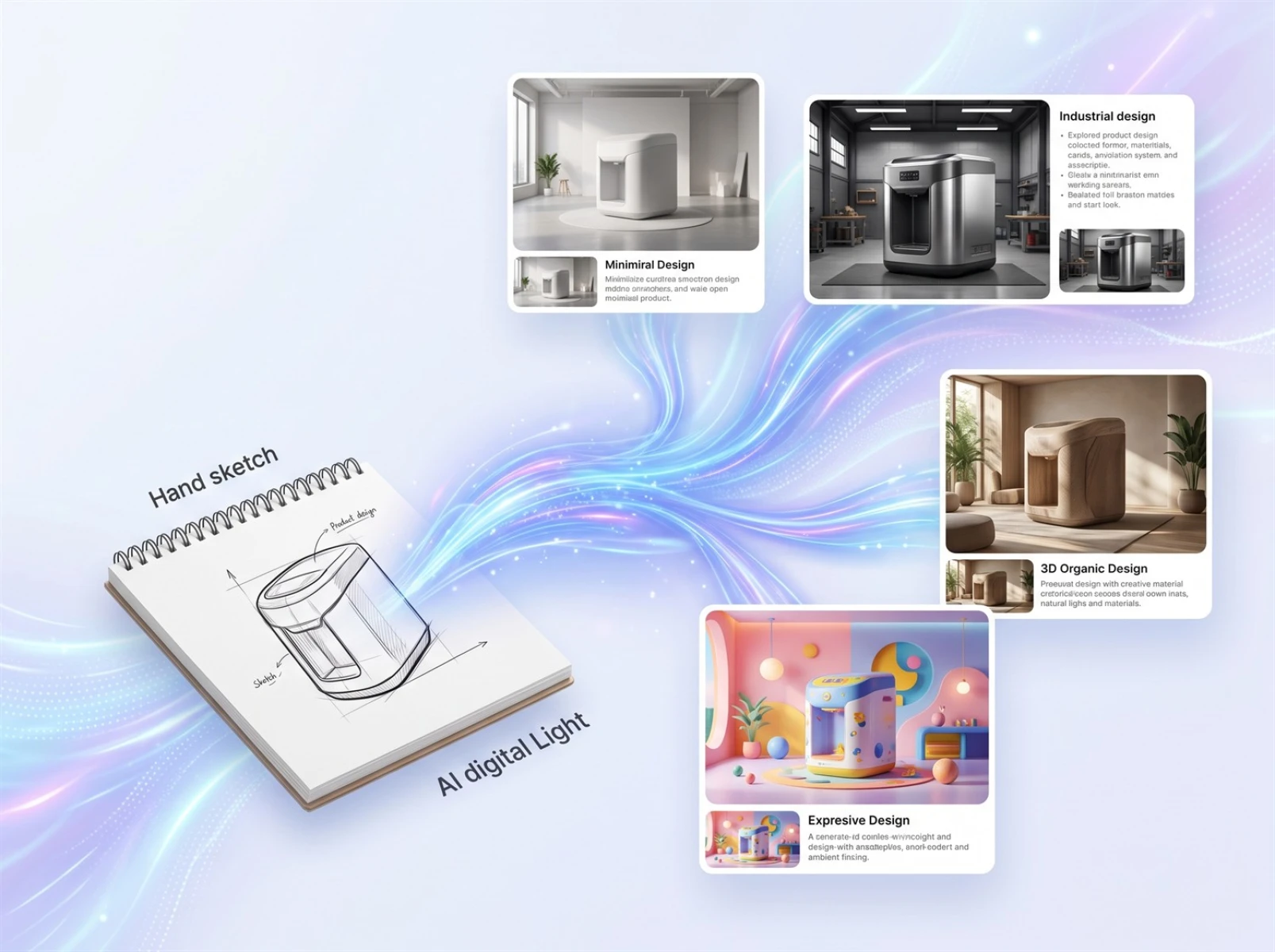
I. How to Turn a Single Sketch into Design Renderings in Minutes
Compared with the tedious workflows of traditional manual modeling, rendering, and photo retouching, Fast Image AI’s AI-powered sketch-to-image tool features an intuitive operation process that requires no sophisticated professional design skills, making it accessible to both beginners and industry professionals. The tool streamlines the creative visualization process, zeroing in on users’ core demands to eliminate complicated operations and slash the time cost of turning sketches into finished visuals.
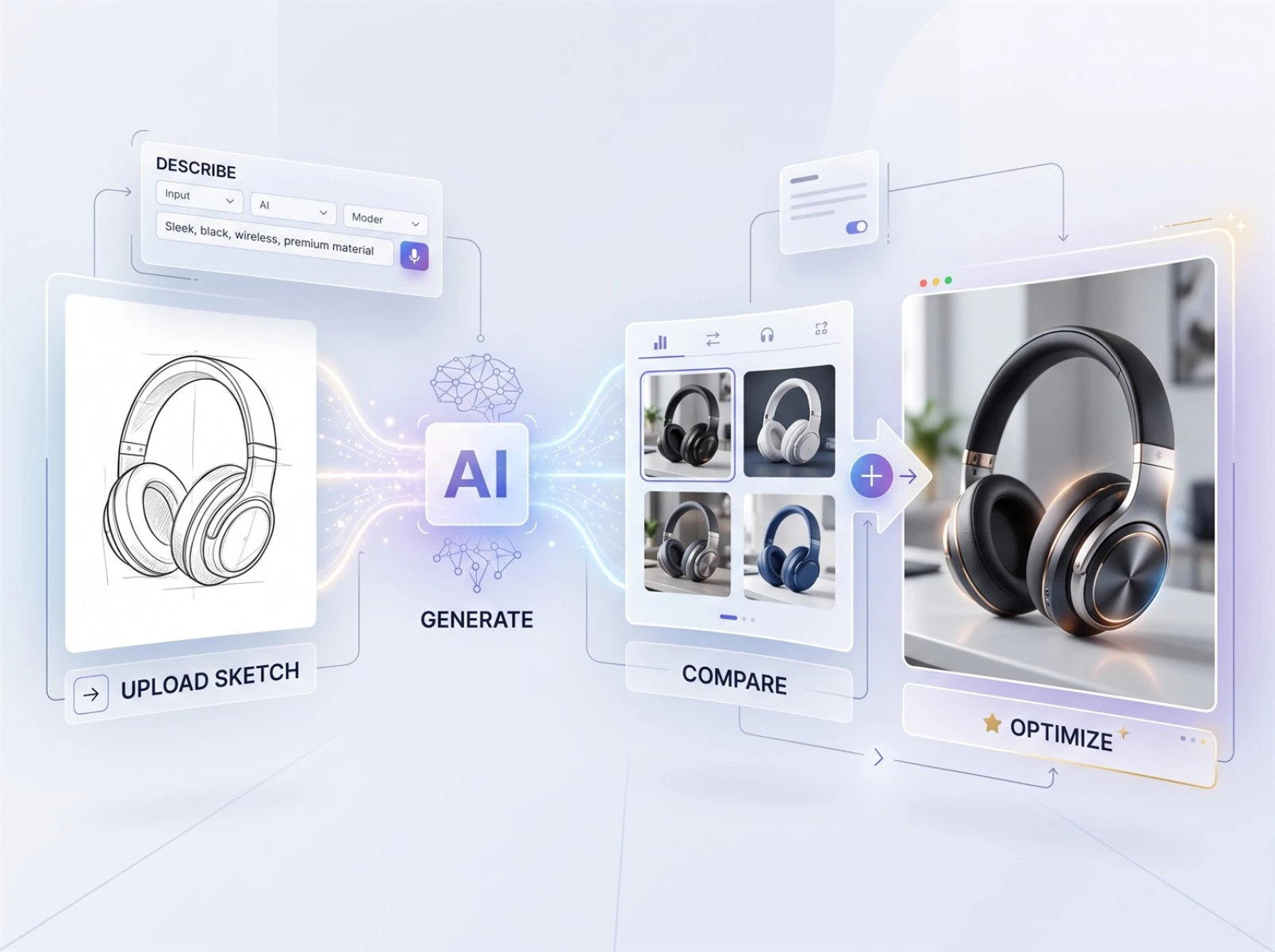
The overall workflow is straightforward, consisting of four core steps:
1. Upload your sketch. Supported materials include photos of pen-and-paper hand-drawings, mouse-drawn drafts, product structural sketches, and spatial layout drafts. No elaborate pre-polishing is required; only clear core structures and original creative concepts need to be retained.
2. Specify design requirements. Outline details such as visual style, color palette, materials, and scene atmosphere based on your use case to align outputs with specific creative demands.
3. Generate renderings. The system analyzes the composition, core structure, and creative information embedded in your sketch to generate renderings, enriching visual details and texture to deliver fully formed visual proposals instantly.
4. Compare and iterate for optimizations. Users can generate multiple differentiated proposals consecutively for side-by-side comparison to select optimal directions, and fine-tune parameters for further iterations according to detailed demands. Unlike traditional high-fidelity rendering workflows, this tool drastically cuts the time required for preliminary scheme validation and enables fast initial realization of creative concepts.
II. Explore Diverse Design Directions from One Single Sketch
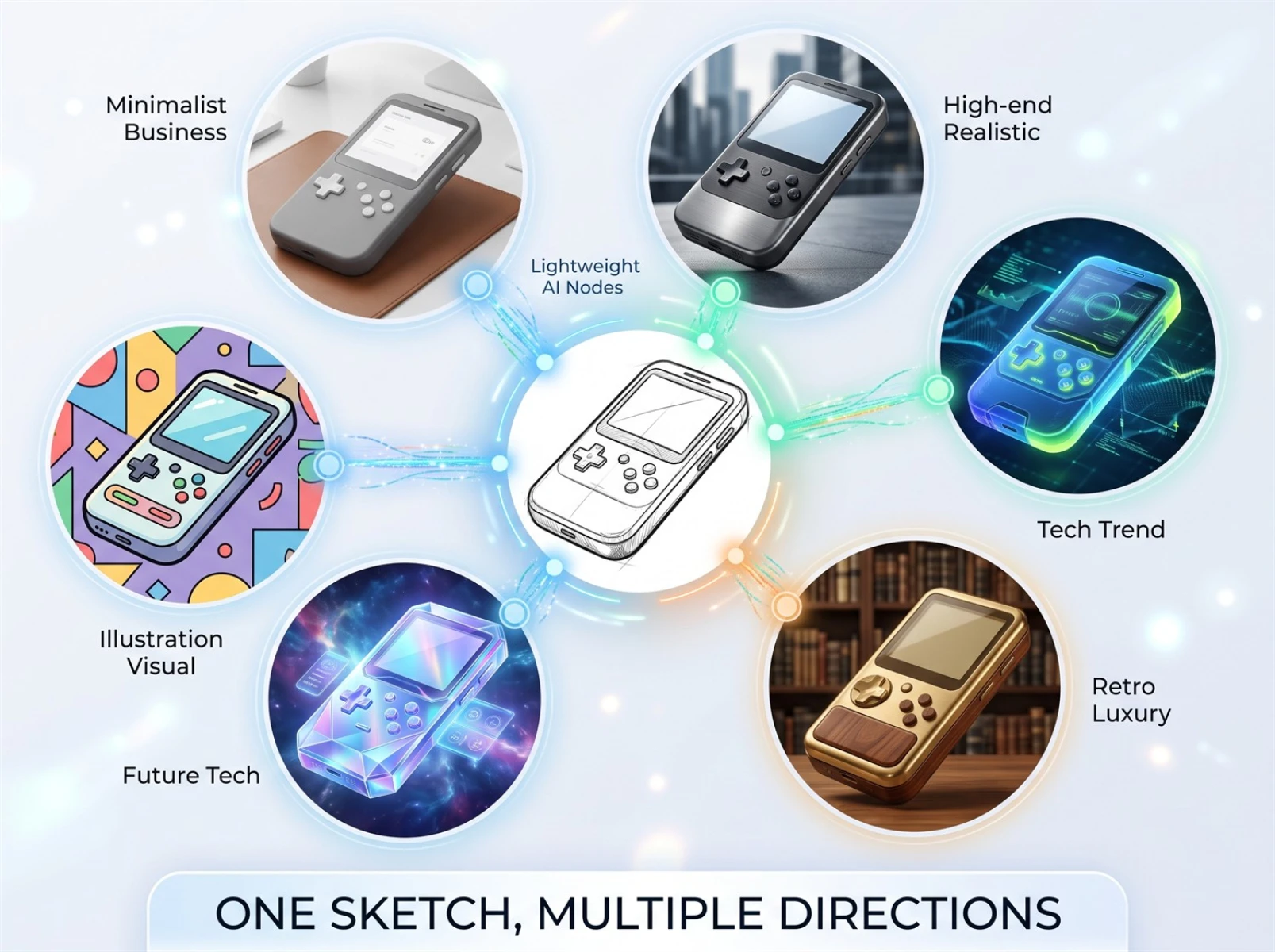
Traditional design workflows carry obvious limitations: a single creation only delivers one scheme with a fixed style and scene. Testing alternative visual effects requires redrawing sketches and repeated rendering, which not only hurts efficiency but also locks creative thinking and limits exploration of design possibilities. A core strength of Fast Image AI’s sketch-to-image feature is that it breaks the barrier of single-output creation. Powered by intelligent algorithms, it generates multi-dimensional, differentiated design variants based on one original sketch, allowing creators to fully unlock the potential of their ideas.
Tailored to diverse creative demands, the tool supports a wide range of visual aesthetics through descriptive prompts, including minimalist business, high-end photorealism, futuristic tech, retro luxury, anime illustration, and more, catering to visual expression needs across all industries. Users may adjust color matching, lighting atmosphere, and material texture via design briefs: product sketches can be rendered with metallic, frosted, matte, and other finishes, while graphic design sketches adapt to solid-color backdrops, real-life scene layouts, and more. Without repeated hand-drawing, one core composition yields multiple distinct renderings suitable for scheme presentations, marketing tests, content illustration, and pre-launch internal product reviews. Generated outputs facilitate early creative comparison, team brainstorming, and direction screening, effectively broadening creative horizons and lowering trial-and-error costs.
III. Typical Scenarios: Rapidly Translate Sketches into Formal Design Proposals
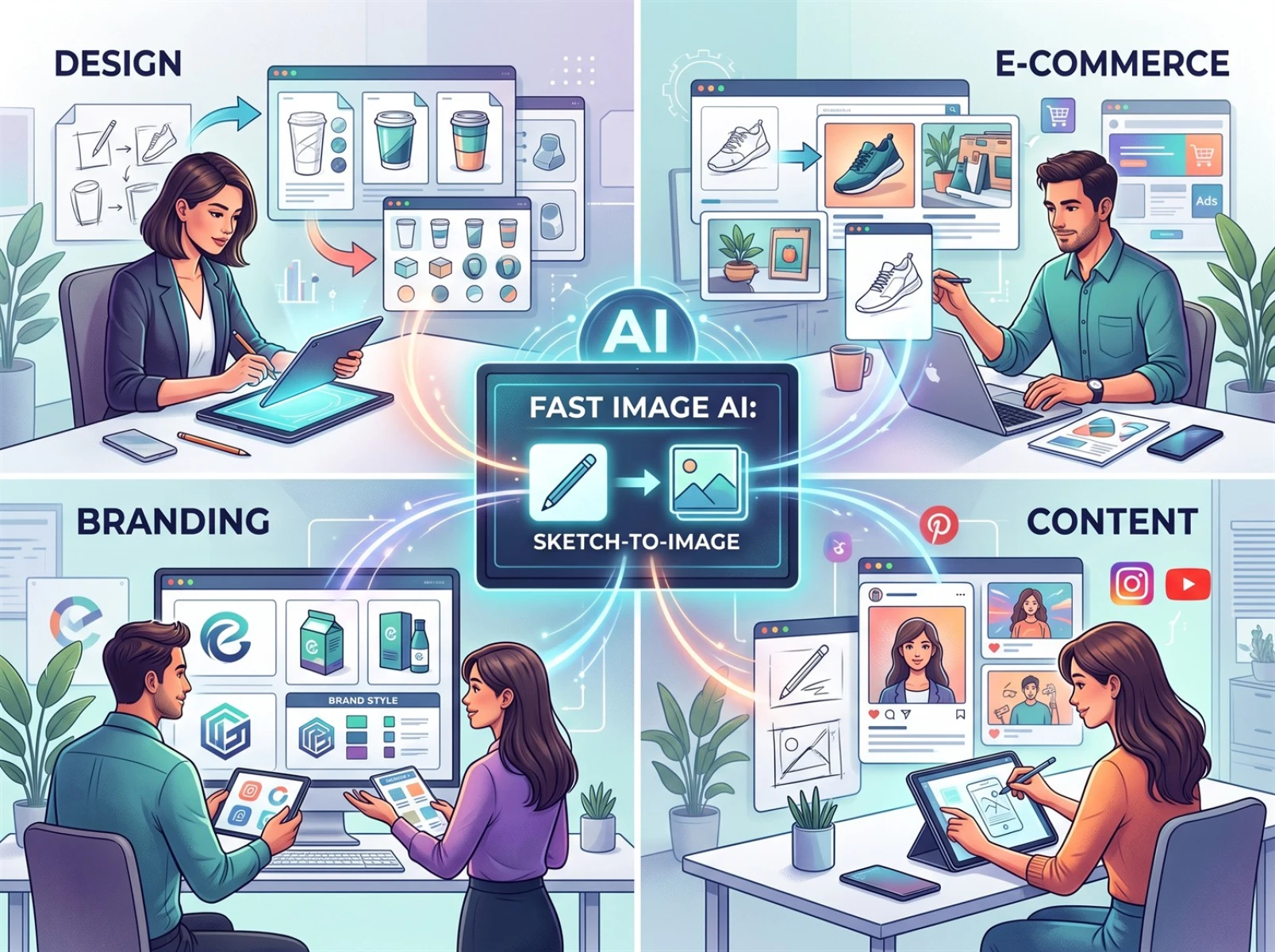
Focused on lightweight creative assistance, the sketch rendering tool fits pre-design demands across numerous industries and use cases. It fundamentally resolves the issues of slow creative validation, high trial costs, and monotonous scheme outputs, delivering an efficient iteration tool for all types of creators.
For Professional Designers
It acts as an auxiliary tool for creative iteration. In daily design work, massive amounts of time are wasted on repetitive tasks such as initial draft rendering, style trial, and basic visual refinement, leaving limited time for core creative polishing. With this AI design tool, designers can instantly convert hand-drawn sketches into multiple draft proposals without endless minor sketch revisions. Teams can quickly screen directions and conduct brainstorming sessions using generated visuals, then move on to detailed refinement after locking the core style. This reduces unnecessary revision loops, shifts focus to creative innovation and detailed polishing, and greatly boosts overall productivity.
For Cross-Border E-Commerce Store Operators
It addresses the pain points of missing new product assets and high visual testing costs. Newly launched products rarely have finished real-shot imagery available for main product photos and promotional visuals. Operators may sketch product compositions and display layouts, then leverage the sketch-to-image function to rapidly generate marketing visuals for store launches and trial campaigns. Multiple color palettes, scenes, and display styles can be tested side-by-side, offering clear references for subsequent marketing trials and asset optimization. It lessens reliance on designer scheduling and outsourced design services, enabling operators to complete visual direction testing for new products far faster.
For Brand and Marketing Teams
It fits preliminary creative work including brand visual upgrades, event poster planning, and cultural and creative product development. In early project stages, teams avoid allocating heavy manpower to create high-detail renderings; simple sketches suffice to generate dozens of visual proposals instantly. Teams may compare communication effects across varying styles, color schemes, and layouts, quickly verify creative feasibility, filter directions consistent with brand tonality, and lay clear groundwork for refined design and physical material production. This significantly shortens the overall project iteration timeline.
For Self-Media and Content Creators
It solves the problems of shortages of original materials and homogeneous illustrations. Most content creators lack professional design capabilities to craft high-quality covers, illustrations, and graphic assets. By simply sketching composition frameworks and core creative concepts, users can generate high-definition, customized visual materials to enrich content presentation, elevate the visual quality of graphic articles and short videos, and make creative works more appealing to audiences.
IV. Key Considerations: AI Outputs Are Not Perfect Replicas of Original Sketches
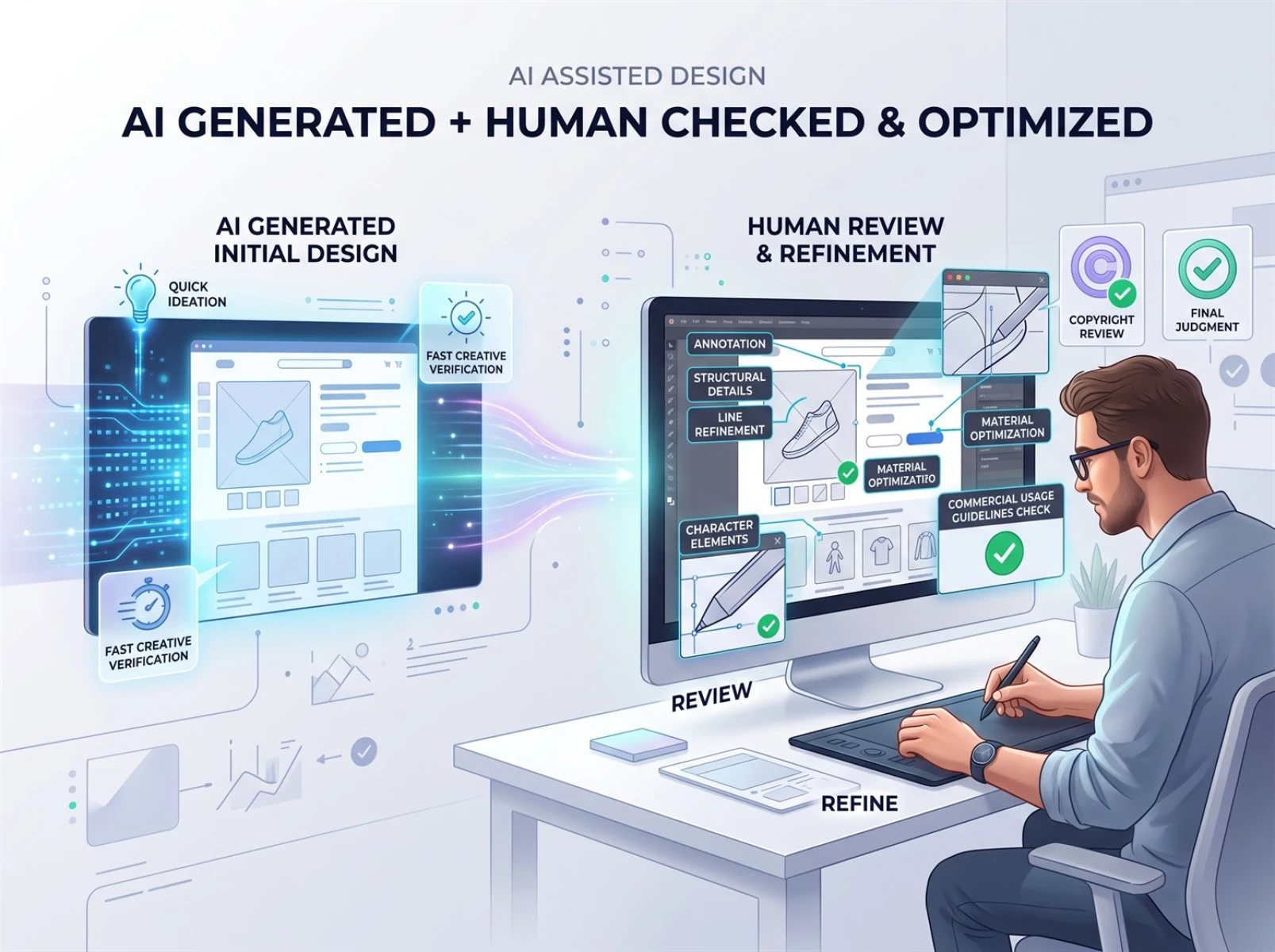
Fast Image AI is positioned as a creative aid for rapid validation, rather than a full replacement for professional design work. Subject to sketch complexity, canvas dimensions, and algorithm randomness, minor detail discrepancies may appear in AI-generated renderings; reconstruction accuracy for complex structures and intricate linework will fluctuate slightly, making 100% precise replication unattainable. As such, generated visuals are best suited for early-stage creative validation, scheme comparison, and internal team discussions. For final deliverables to be directly deployed in commercial projects, manual review and targeted post-production refinements are recommended based on practical requirements.
Regarding commercial usage compliance, the commercial licensing rights of generated images depend on platform rules, source materials, and actual application scenarios. If visuals feature human figures, trademarks, or other protected elements, users must independently verify authorization requirements and confirm full compliance before commercial deployment to avoid copyright and legal risks and ensure secure content utilization.
V.Conclusion: Free Creative Validation from Efficiency Constraints
Against today’s fast-paced creative and commercial competition landscape, the speed of creative realization directly dictates project progress and market trial capabilities. Traditional design workflows are plagued by lengthy rendering waits, single-scheme outputs, and costly human trial cycles, which stifle creative thinking and delay project timelines. The core value of AI-powered creative validation lies in streamlining cumbersome early visualization workflows. Its lightweight, high-speed, multi-variant rendering model resolves the core pain points of conventional design.
Fast Image AI remains laser-focused on preliminary creative validation, rather than promising one-click final design deliverables. It specializes in helping all creators quickly realize sketched concepts, expand design horizons, and cut trial-and-error expenses. It does not replace full professional design pipelines, but optimizes the most time-consuming pre-validation stage. Users can rapidly generate multi-directional proposals for efficient comparison and screening before shifting focus to detailed refinement and implementation. It empowers individual creators and commercial team project iterations across the board, enabling faster creative validation and freeing up more time for high-value design and creative work.