Fast Parallel Multi-Designs - Fast Image AI Sketch-to-Image for Low-Cost Creative Iteration
At two o’clock in the morning in a design studio, hand-drawn sketches cover every desk. The client has requested three sets of stylized renderings for a presentation the day after tomorrow. A single set of interior renderings takes at least two days to model and render; three sets would take six days, and even pulling all-nighters may not guarantee delivery. Taking the project means the team has to work around the clock, doubling labor costs, while turning it down risks losing a long-term client.
This is a shared predicament for all design professionals: more creative trial and error means soaring costs; to stay on budget, teams have to compromise on a narrow set of options. Many ideas that could have stood out are killed at the draft stage by the harsh reality that “bringing them to life costs too much”. Now, a casually drawn sketch can be turned into multiple production-level renderings in parallel in just a few minutes. Fast Image AI’s sketch-to-image feature is rewriting the cost formula of creative trial and error.
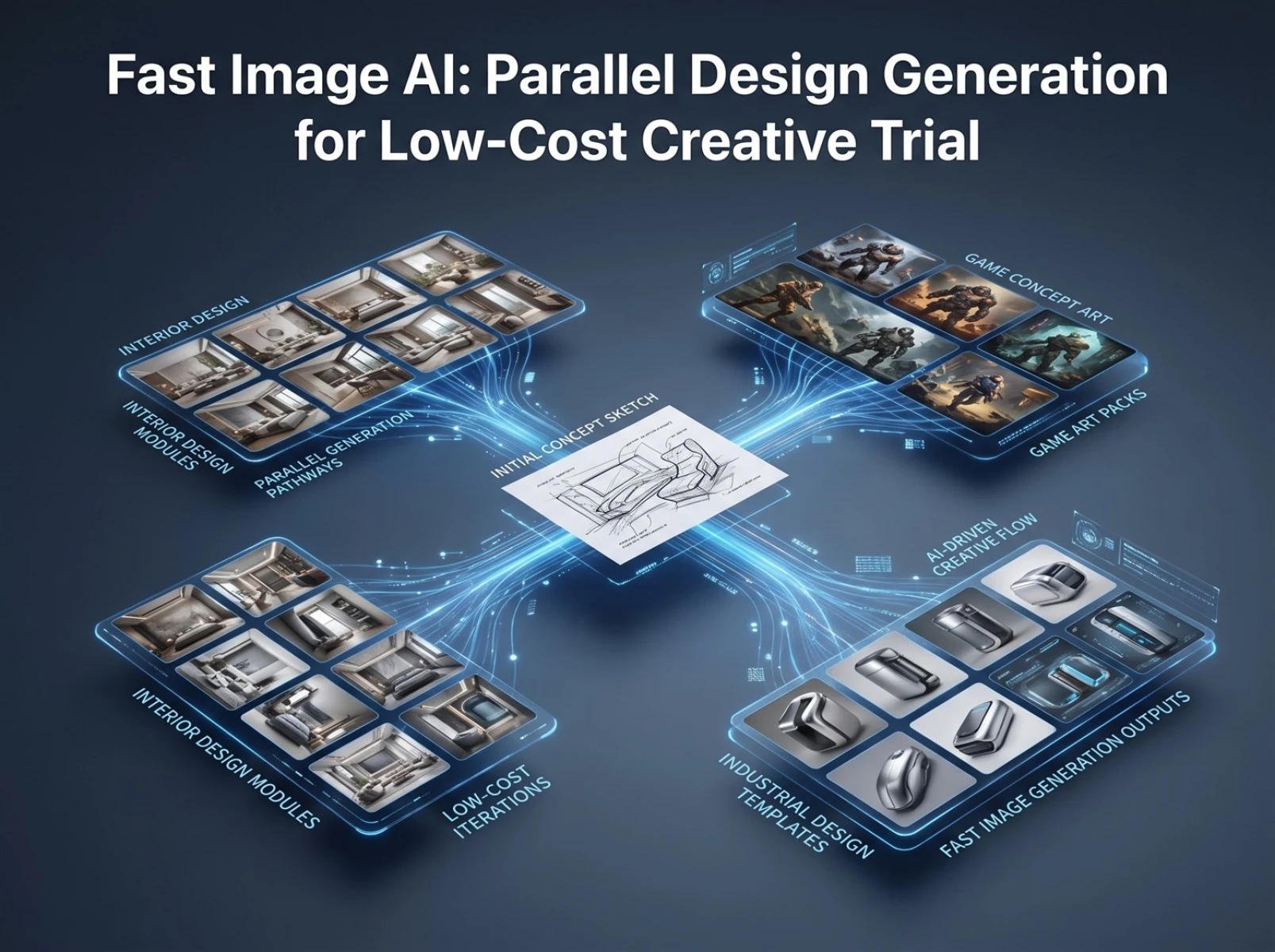
I. The "Multiple Solutions Dilemma" Every Designer Cannot Escape
The essence of commercial design is finding the optimal solution among countless possibilities, but the price is often too high for teams to bear.
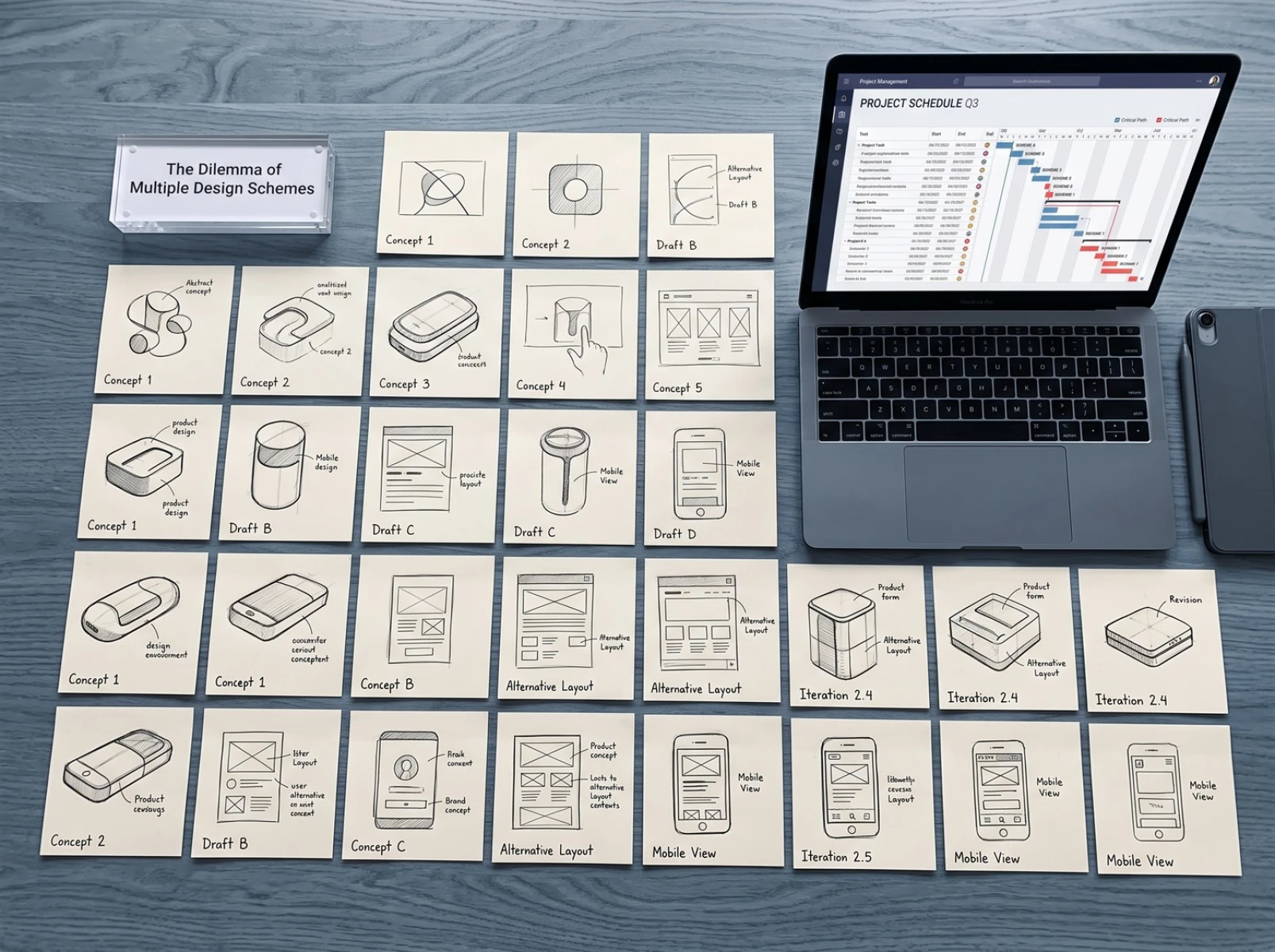
A casual line from the client in a proposal meeting — “come up with two more style versions” — means most of a week’s rendering work goes to waste. Brilliant ideas sparked during brainstorming sessions can only be narrowed down to the safest option due to limited manpower. For freelance designers working on small projects with already thin profit margins, two extra rounds of revisions mean the job pays nothing at all.
The unspoken rule of the industry is that every additional solution adds more labor, longer timelines and higher costs. A full-set interior panoramic rendering costs over a thousand yuan; game concept art pieces cost thousands; industrial design appearance schemes take weeks to refine. For small and medium-sized teams and independent creators, parallel validation of multiple solutions has always been a luxury — it’s not that they don’t want to try, but that they simply can’t afford to.
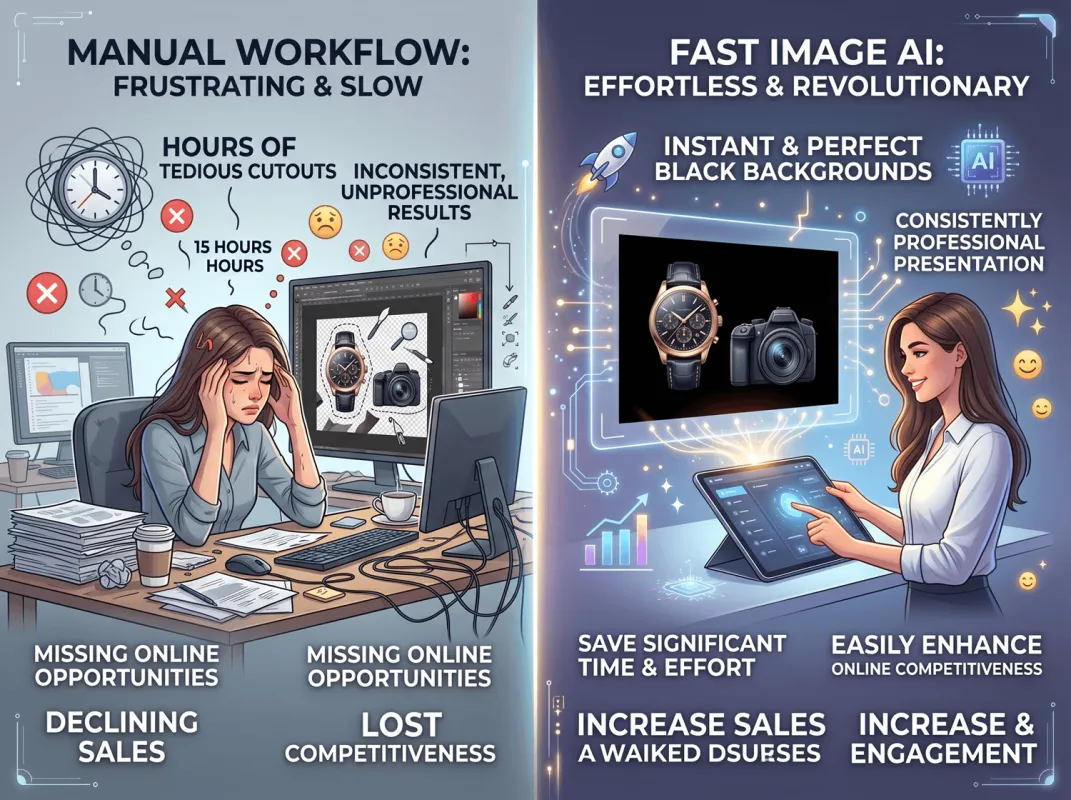
What makes it even more frustrating is the lag in creative validation: you can only judge if a direction works when you see the finished product. The traditional workflow requires pouring hours into turning sketches into finished works just to eliminate bad directions. A huge amount of energy is wasted on discarded solutions, leaving less time to polish the best one.
This is the vicious cycle of the design industry: better creativity comes with higher trial-and-error costs; to control costs, creative boundaries have to be narrowed. The key to breaking this cycle is to bring the cost of turning sketches into finished products down to nearly zero.
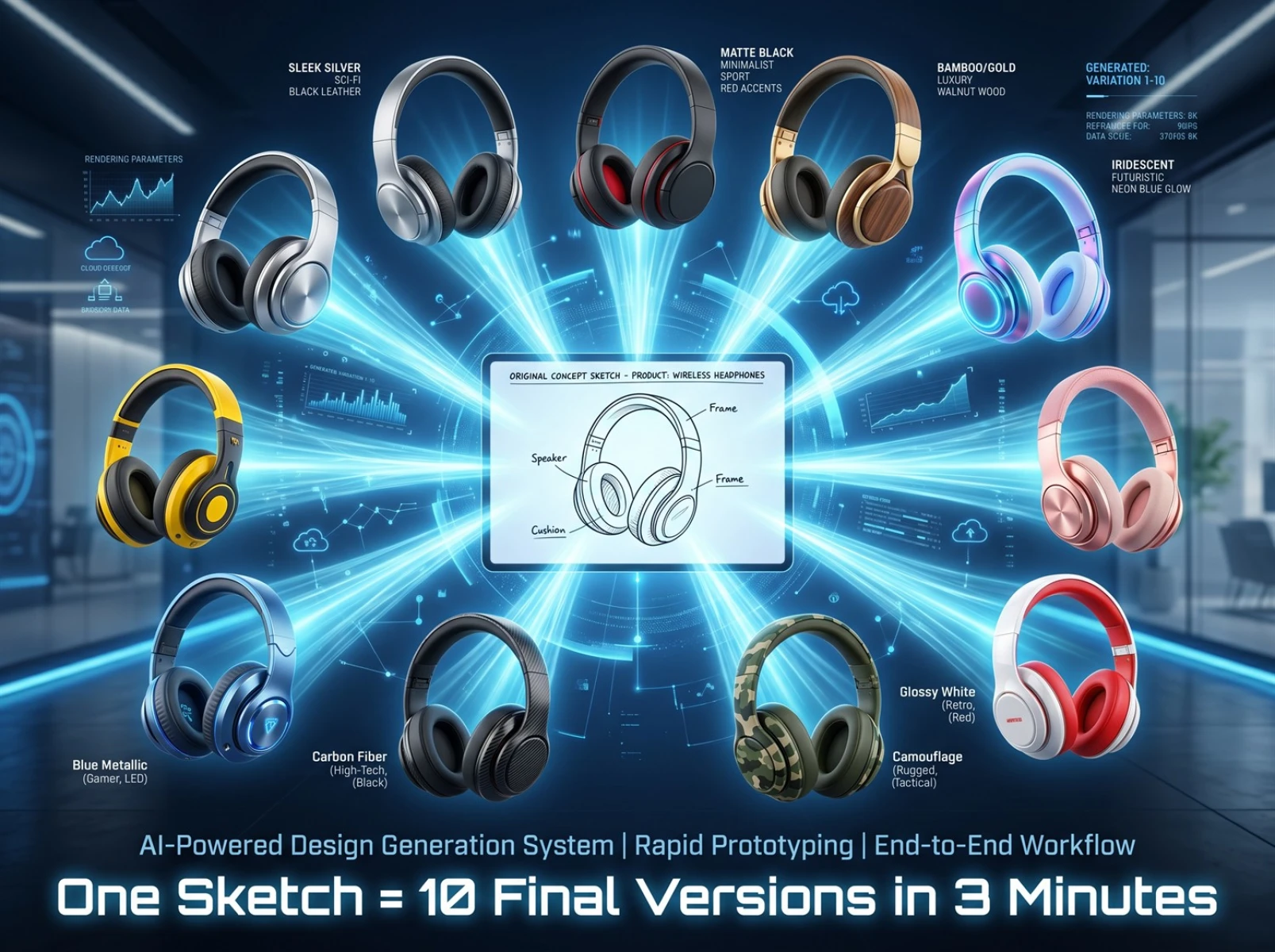
II. One Sketch Equals Ten Finished Works: Days of Work Completed in 3 Minutes
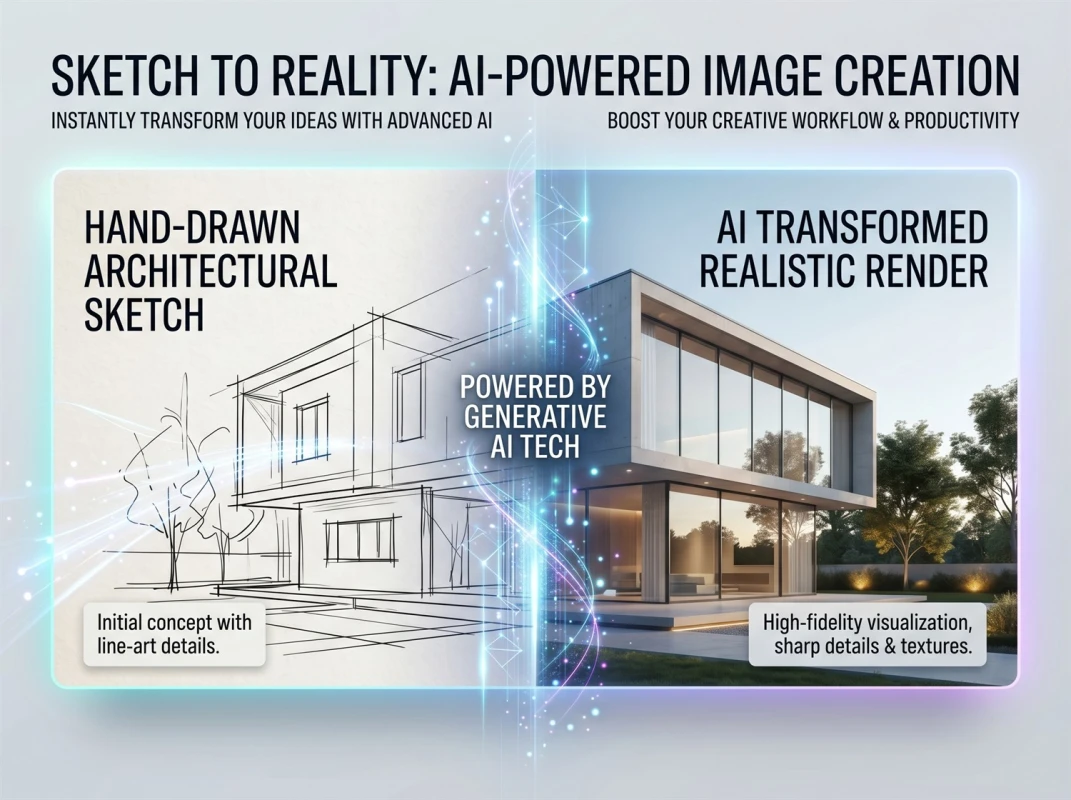
The core breakthrough of Fast Image AI is not that AI can generate images, but that it enables hand-drawn sketches to be batch-converted into professional-grade finished solutions at extremely low cost and with high fidelity.
Unlike ordinary AI drawing tools that generate images from keywords, Fast Image AI is equipped with a self-developed 3D space parsing algorithm. It accurately reads the line structure, spatial perspective and layout logic in rough drafts, and transforms messy lines into polished finished works strictly following the designer’s original vision. Creative control remains firmly in the designer’s hands — AI only handles the most time-consuming rendering and execution work.
The operation has an almost zero learning curve: upload a hand-drawn sketch, select style directions, and generate with one click.
The real advantage lies in its parallel output capability: users can select multiple styles at once, and the system generates complete corresponding solutions simultaneously. Five sets of comparison schemes that used to take a week to polish can all be presented in 3 minutes.
The generated solutions are not disposable semi-finished products. Users can adjust materials, lighting and color schemes via keywords, and the tool supports local repainting — unsatisfactory parts can be modified individually without redrawing the entire image. Teams can quickly expand creative directions, lock in the optimal solution, and then refine it in detail. This entire workflow can reduce ineffective workload by over 80%.
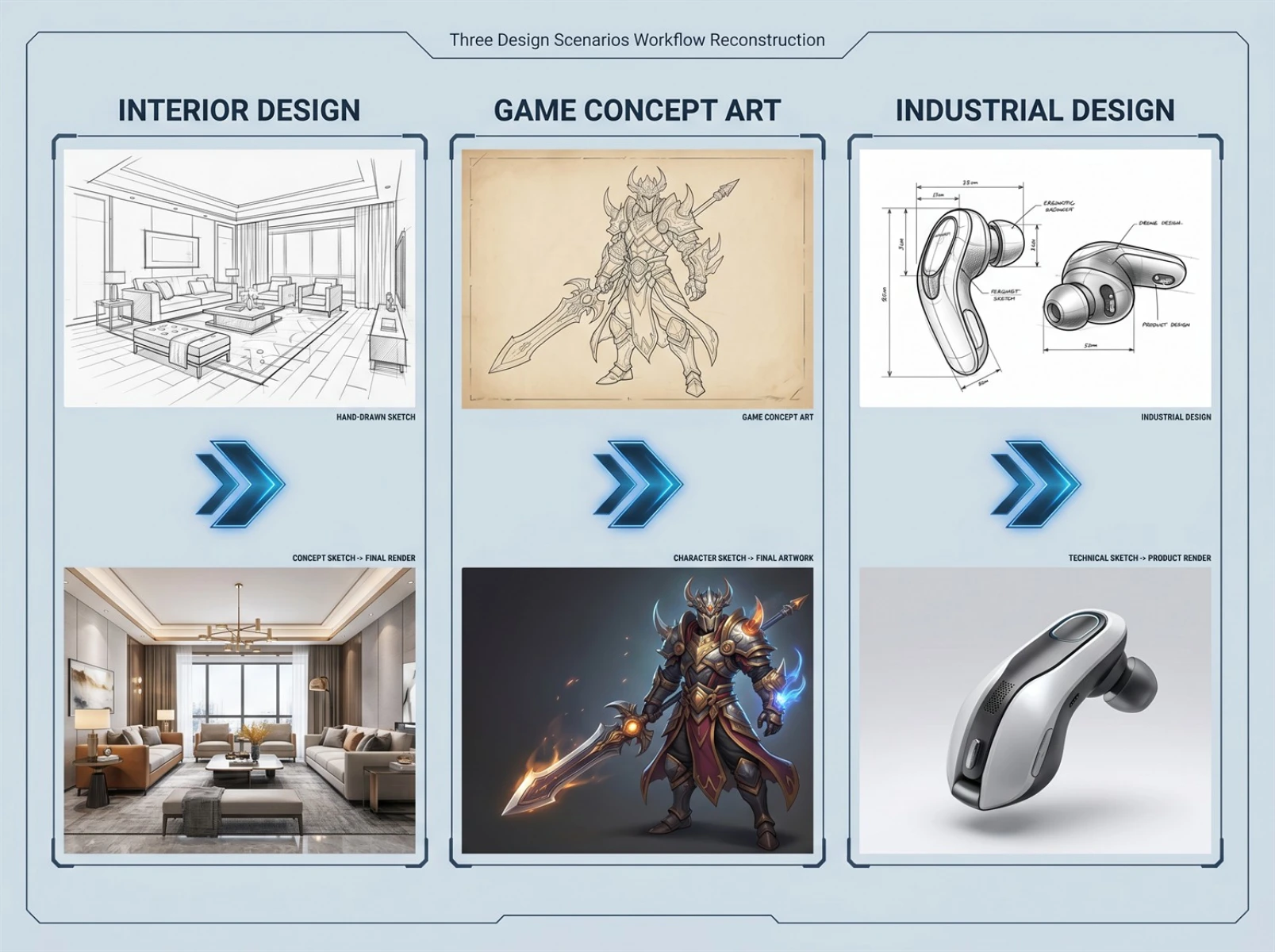
III. Real-World Application in Three Design Scenarios: Line Art-to-Finished Image Restructures Workflows
The value of converting hand-drawn sketches into renderings ultimately lands in real work scenarios, and is restructuring team workflows in three major fields: interior design, game concept art and industrial design.
1. Interior Design: Produce Renderings On-Site After Measurement, Doubling Client Conversion Efficiency
For interior designers, the most grueling part is turning sketches into presentation-ready renderings. In the traditional workflow, after discussing requirements with the client, the designer has to draw CAD files, build models, apply materials and set up lighting. It takes two to three days at best, a week at worst, to produce renderings for confirmation. Many clients drop out during the waiting period, and mid-process changes to style or layout lead to repeated rework.
With Fast Image AI’s sketch-to-image feature, designers can quickly sketch out the space layout after on-site measurement, upload the sketch, and generate multiple sets of stylized renderings right on the spot. Clients can see the decoration effect while sitting in the store, compare options and finalize the direction on the spot. The sales cycle is compressed from one week to one hour, significantly boosting contract conversion rates. While front-end sales efficiency improves for home decoration companies, the workload of the back-end rendering team is also greatly reduced.
2. Game Concept Art: 10x Faster Style Exploration, Giving Time Back to Creativity
Game art concept design is essentially a process of extensive trial and error. Characters need to be tested in multiple art styles; scenes need to be validated for different atmospheres. Each style requires coloring and detailing from line art, taking half a day or more per set. When project schedules are tight, many creative directions have to be cut. What finally goes live is often “the solution that could be finished on time”, not the optimal one.
With this draft-to-photorealistic rendering capability, a single line drawing can be converted into over ten finished pieces in different styles. The art team can quickly screen out directions that fit the project’s tone, then focus their energy on detailed polishing. A week’s worth of style exploration work can now be completed in an afternoon. The team can free up capacity for creative divergence, refining character personalities and scene narrative, and channeling productivity into core creativity.
3. Industrial Design: Test 10 More Shape Versions Early, Save Hundreds of Thousands in Mold Costs Later
In industrial design, once an appearance scheme enters the mold opening stage, modification costs can run into tens or even hundreds of thousands of yuan. Many enterprises have learned the hard way that “sketches look fine, but the finished product falls short” — yet they cannot validate too many shapes in the early stage, because every extra photorealistic rendering means days of work for designers.
Fast Image AI’s sketch-to-image feature accurately reproduces product curved surface structures, material textures and lighting effects. A casually drawn sketch can be turned into high-definition, near-photorealistic renderings in minutes. Designers can quickly try different curvatures, color schemes and craftsmanship, and eliminate unreasonable shapes at the sketch stage. Spending half an hour testing ten more versions in the early stage can avoid hundreds of thousands of yuan in mold rework costs later — it is both an efficiency boost and a risk control measure.
IV. Low-Cost Trial and Error Is Not Just a Slogan: The Numbers Show How Worthwhile It Is
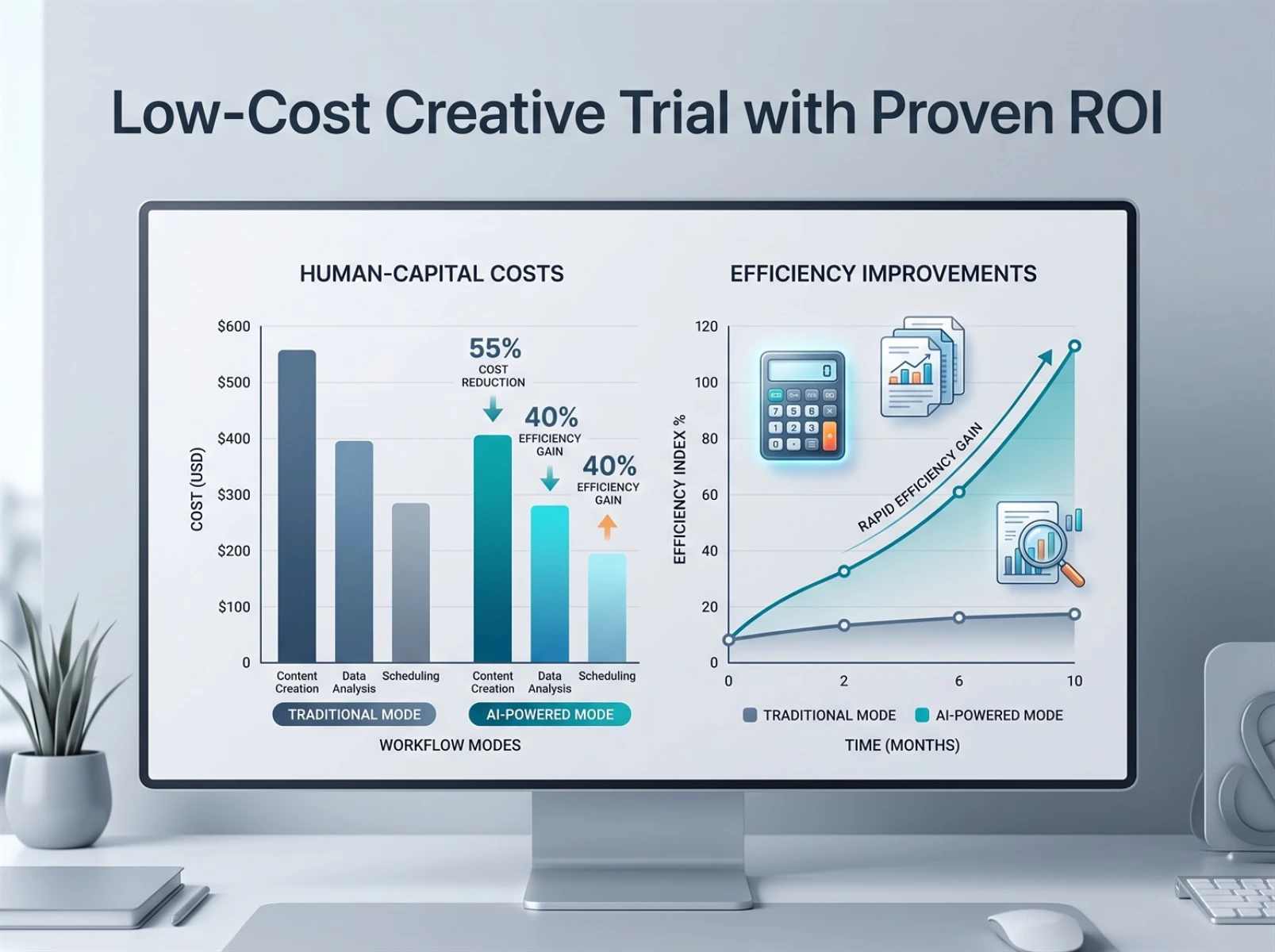
Many teams hesitate to use AI tools, worrying that “it looks fast but isn’t useful in practice”. A simple calculation of labor costs makes the answer very clear.
A senior design position costs about 3,000 US dollars per month, nearly 140 US dollars per day. In the traditional model, producing 5 complete sets of solutions in different styles takes at least 5 working days, with labor costs alone approaching 700 US dollars — not to mention time and communication costs. With batch generation via sketch-to-image, the same 5 sets of solutions can all be produced within half an hour, with almost zero marginal cost. The saved time and manpower can be used to take on more projects, or to polish the optimal solution.
This is not simply a speed increase, but an upgrade of the design work model: creative output capacity grows exponentially, with the number of directions one person can validate per week rising from 2–3 to over a dozen; the labor structure is optimized, as repetitive rendering and coloring work is handed over to AI while designers focus on creative strategy and aesthetic control; trial-and-error barriers are completely lowered, so teams can boldly experiment with niche styles and novel ideas, making it easier to produce differentiated works.
The most precious thing in the creative industry is never physical labor, but ideas. When trial and error no longer carries a cost burden, ideas can grow freely.
Conclusion: Let No Creative Idea Be Abandoned Due to Cost
The greatest regret in design is never “I can’t do it well”, but “I had a better idea, but I couldn’t afford to make it real”.
How many excellent ideas are abandoned at the sketch stage due to time, budget and manpower constraints? How many final project solutions are merely “the best solution allowed by cost”, not the true optimal solution? The significance of Fast Image AI’s sketch-to-image feature is to remove the cost threshold for bringing creativity to life. Whether they are freelance designers, small studios or in-house brand teams, everyone can quickly validate inspirations at extremely low cost, so that ideas no longer stay trapped on draft paper.
Generating multiple solutions in parallel and low-cost creative trial and error are no longer exclusive capabilities of top companies — they are efficiency tools every creator can use. When creativity is no longer limited by cost, the real creative explosion of the design industry has only just begun.