Validate Product Ideas - Fast Fast Image AI Converts Sketches to HD Concept Renders
Many product managers face persistent workplace pain points: unrefined creative concepts lack visual renderings. Relying solely on written documents and verbal descriptions makes internal reviews, user research and project initiation hard to advance. The traditional workflow requires waiting for designers’ available schedules, resulting in high trial-and-error costs and slow iteration cycles that hold back early-stage exploratory work.
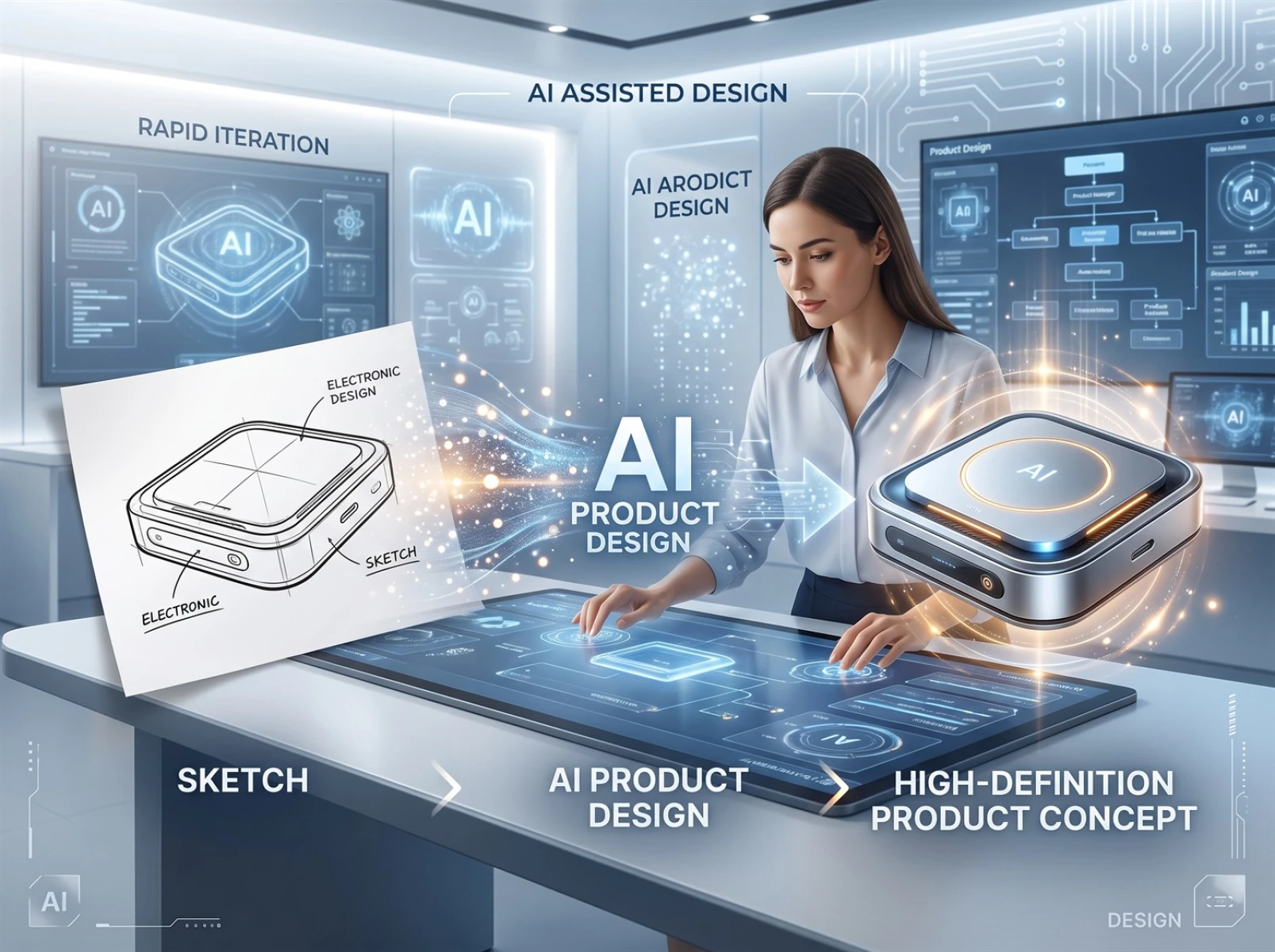
Today, powered by Fast Image AI’s sketch-to-image artificial intelligence capabilities, product managers can draft rough sketches and generate high-definition product concept renderings with a single click to quickly visualize creative concepts. This significantly boosts the efficiency of traditional validation workflows. Product teams can first verify directional feasibility before allocating full design resources, thereby cutting losses caused by misjudged decisions.
I. Why Traditional Product Idea Validation Is Inefficient
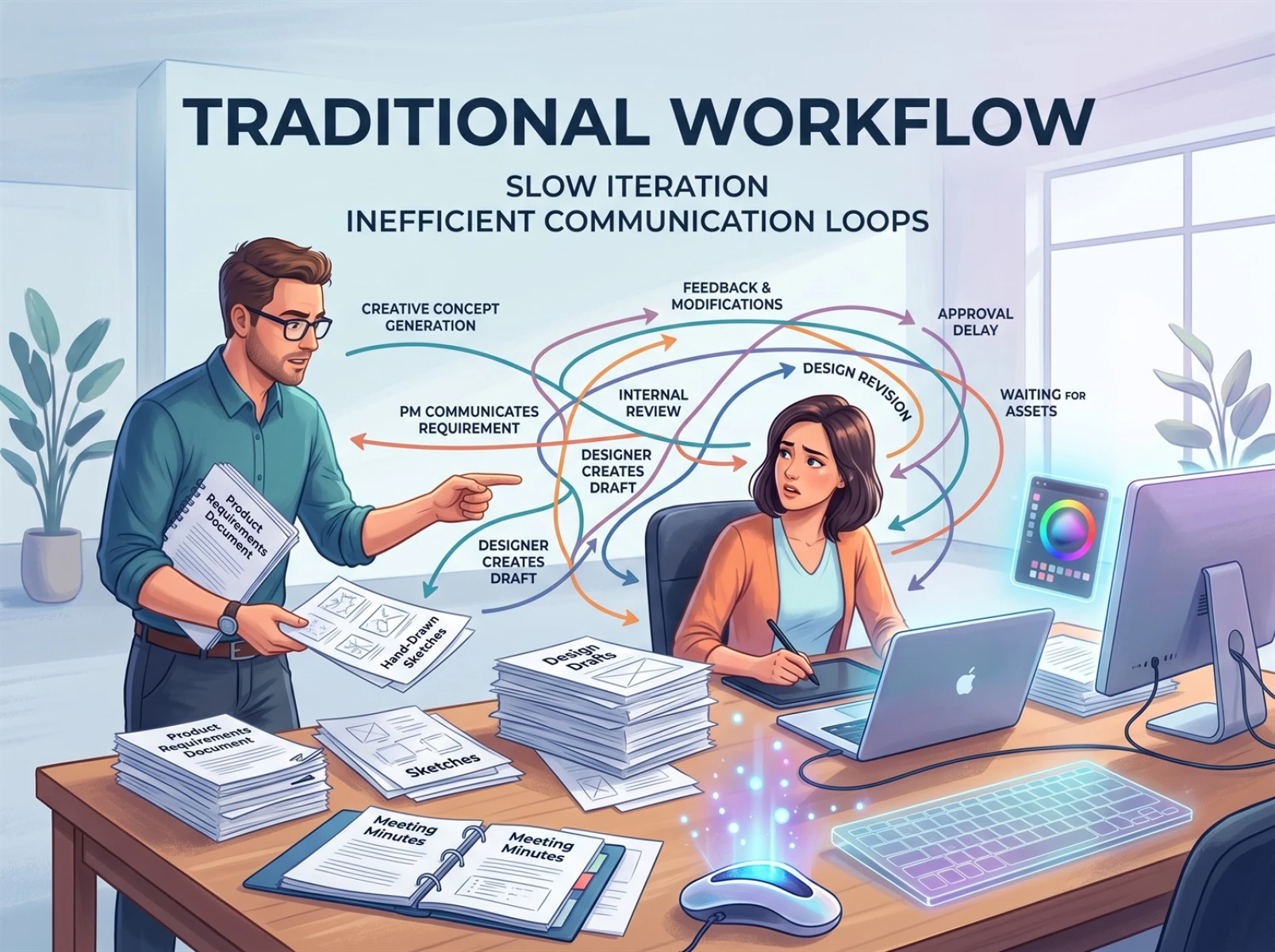
Traditional idea validation depends on cross-departmental collaboration and involves lengthy workflows. Producing just one concept drawing requires product staff to draft requirements and hand-draw sketches, followed by repeated communication and revisions with designers. Even simple solutions take several days to finalize, failing to match the pace of rapid iteration.
Most product managers lack professional design expertise, so hand-drawn sketches cannot fully convey structural details, color schemes and interaction logic. Promising creative concepts often get stuck in the early stages due to a lack of visual presentation. AI sketch generation tools enable lightweight, low-cost visual implementation to resolve this pain point.
II. How to Leverage AI to Visualize Product Ideas
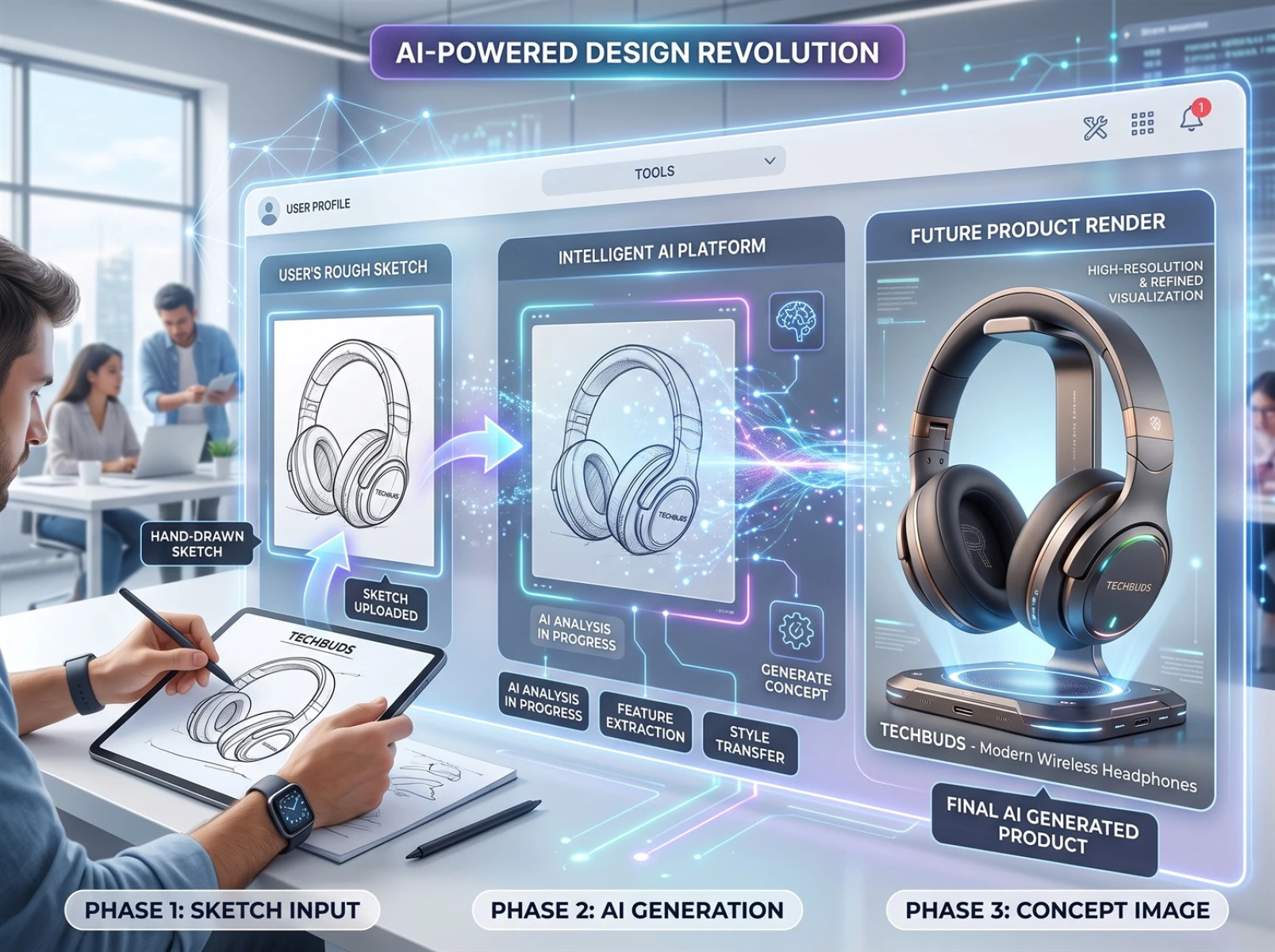
Driven by breakthroughs in AI visual generation technology in 2026, Fast Image AI has built an exclusive sketch-to-image feature tailored to product professionals’ needs for early-stage concept validation. Unlike general image generation models, this function complies with standardized product design specifications. It accepts multiple input formats including rough sketches, line art and annotated doodles, and outputs high-definition renderings in one step, greatly simplifying the visual realization process. For teams that need to quickly validate product directions, AI-assisted product prototyping allows product managers to explore visual schemes ahead of formal design work.
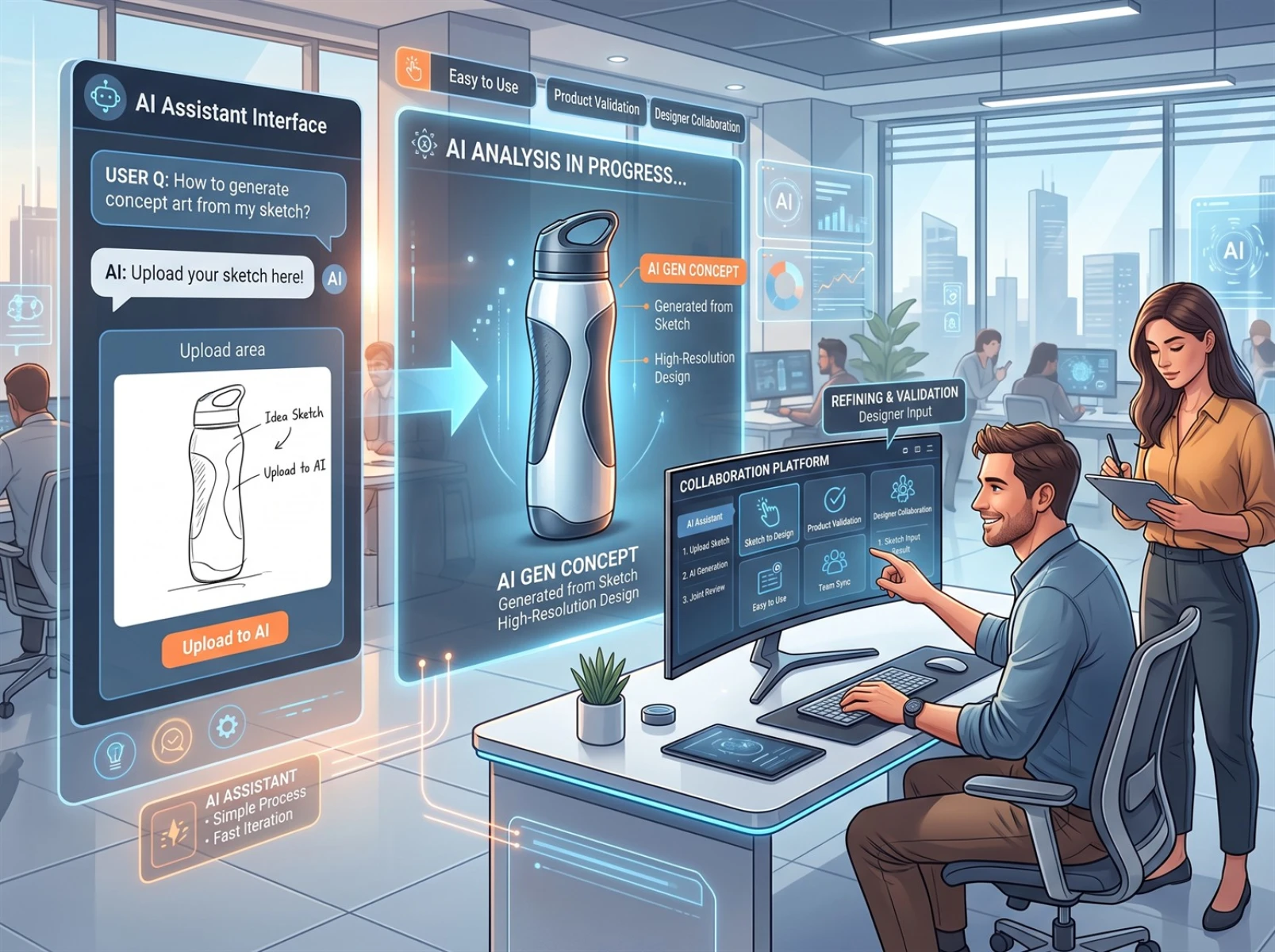
This AI tool restructures the early validation workflow, condensing the previously multi-step, time-consuming process into three simple phases: Sketch + Prompt Input – AI Generation – Result Review. No design expertise or proficiency with drawing software is required. Product managers can independently create visual schemes to assess the rationality of product form, color palettes and layouts, raising trial-and-error efficiency. The platform delivers realistic, controllable renderings and effectively eliminates distorted elements and disproportionate layouts frequently seen in generic AI drawing tools.
III. Core Advantages of Fast Image AI’s Sketch-to-Image Feature
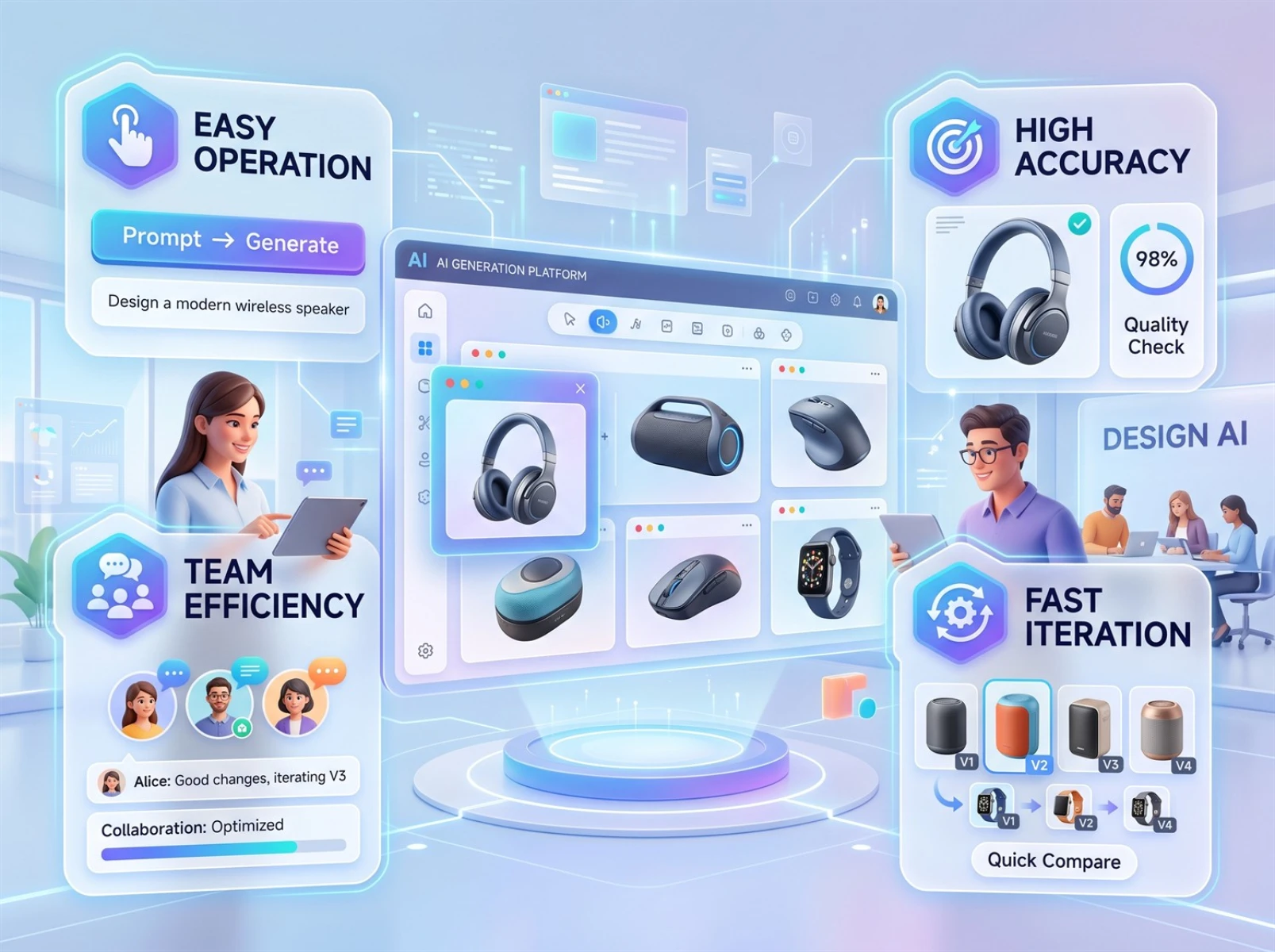
The platform’s sketch conversion tool is a practical utility for product managers verifying solutions, delivering notable improvements in efficiency, precision and real-world implementability.
1. Low Operational Barrier – Usable Without Any Design Background
Practitioners with zero design experience can quickly generate product renderings without mastering drawing software or hand illustration skills. Simply outline product silhouettes, mark core requirements and preferred styles, upload the sketch alongside concise text prompts, and images will be generated instantly. It clearly demonstrates how AI empowers product work, catering to all entry-level product practitioners with no design foundation.
2. High Generation Precision Aligned With Product Launch Standards
It integrates a comprehensive library of pre-trained product design models covering mainstream styles such as tech aesthetics and minimalist business designs, and supports both B2B and consumer-facing products. Generated renderings feature balanced proportions and natural lighting, avoiding malformed elements and skewed layouts common in general AI art generators. The output visuals can serve as key reference materials for internal reviews, project presentations and user testing sessions.
3. Efficient Iterative Trial and Error to Shorten Product Exploration Cycles
Its lightweight design supports low-cost trial runs for teams, with initial drafts generated in a short timeframe. Product managers can tweak sketches, color palettes and artistic styles to batch-produce multiple versions for side-by-side comparison. This enables fast screening of optimal concepts and drastically cuts the total time spent on early idea verification and solution comparison.
4. Optimized Team Resource Allocation to Reduce Early-Stage Design Overheads
AI automates the repetitive foundational work of converting rough sketches into high-definition visuals, freeing designers from routine drafting tasks. Professional design talent can then focus on high-value work including refined UI polishing, interaction logic optimization and product implementation adaptation. This reduces internal labor waste and lifts the overall collaborative efficiency of the team.
IV. Real-World Work Scenarios for the Sketch-to-Image Function
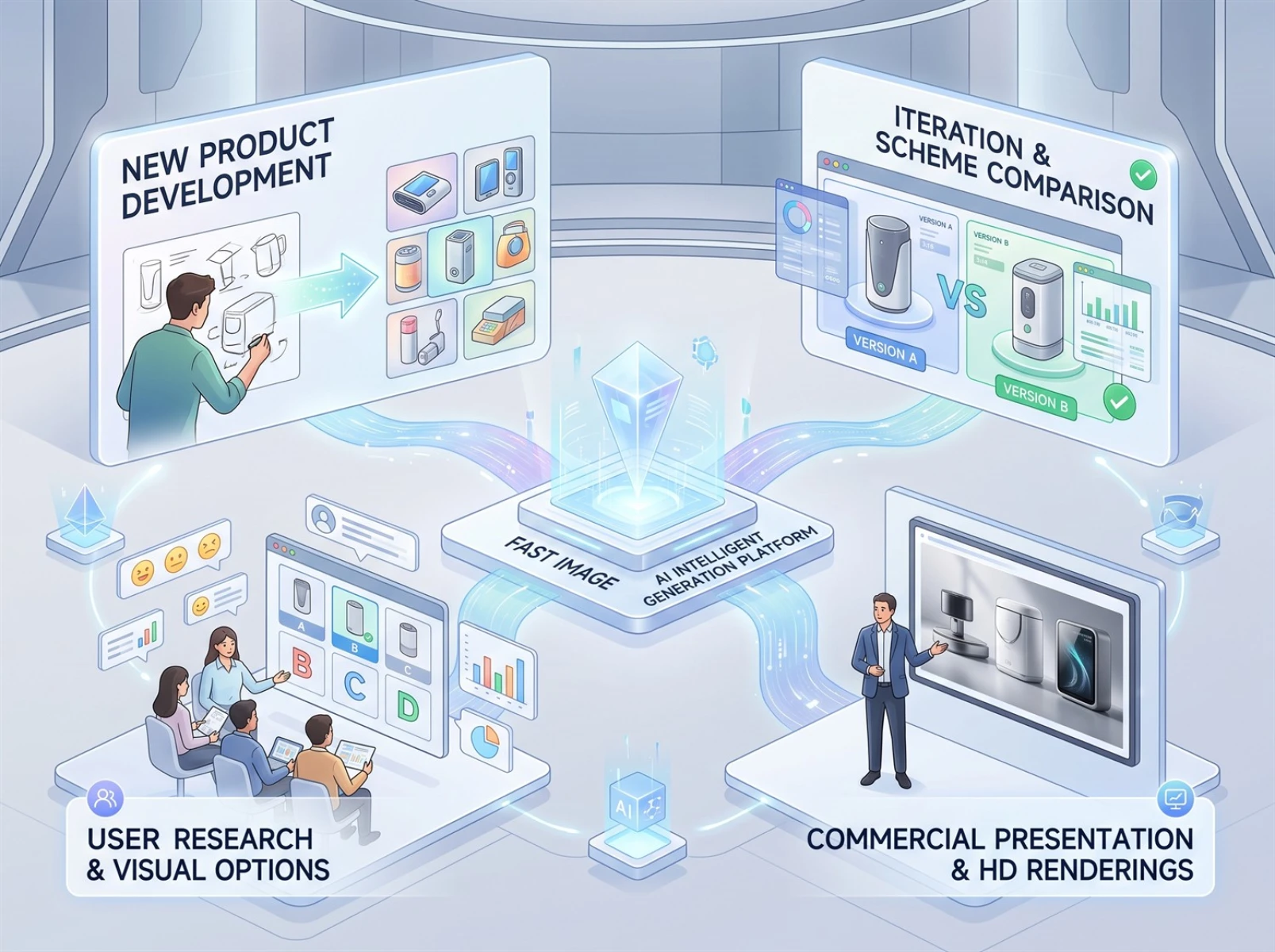
This AI platform supports product concept validation across the full product lifecycle, with practical applications covering end-to-end new product incubation, version iteration, market research and project presentations.
1. New Product Incubation Stage
Quickly generate concept renderings from rough sketches to visually showcase product frameworks and visual styles. Teams can assess implementation feasibility in advance and avoid wasting resources on ill-conceived project launches.
2. Iteration and Optimization Stage
Produce renderings of revised interfaces and feature updates based on simple sketches. Direct visual comparisons between old and new versions provide intuitive visual evidence to support product iteration decisions.
3. User Research Stage
Batch-generate visually differentiated variants as research samples for questionnaires and focus groups. Authentic user feedback can validate creative concepts and mitigate bias stemming from subjective judgment alone.
4. Financing and Project Initiation Presentations
Polished, high-definition AI-generated renderings replace crude hand-drawn sketches, boosting the professionalism of PPT slides and planning documents and facilitating project approval and commercial negotiations.
V. Practical Case Study: Generating Product Visual Concept Renderings From Sketches
Background: Pre-Research on a B2B Smart Office Hardware Line
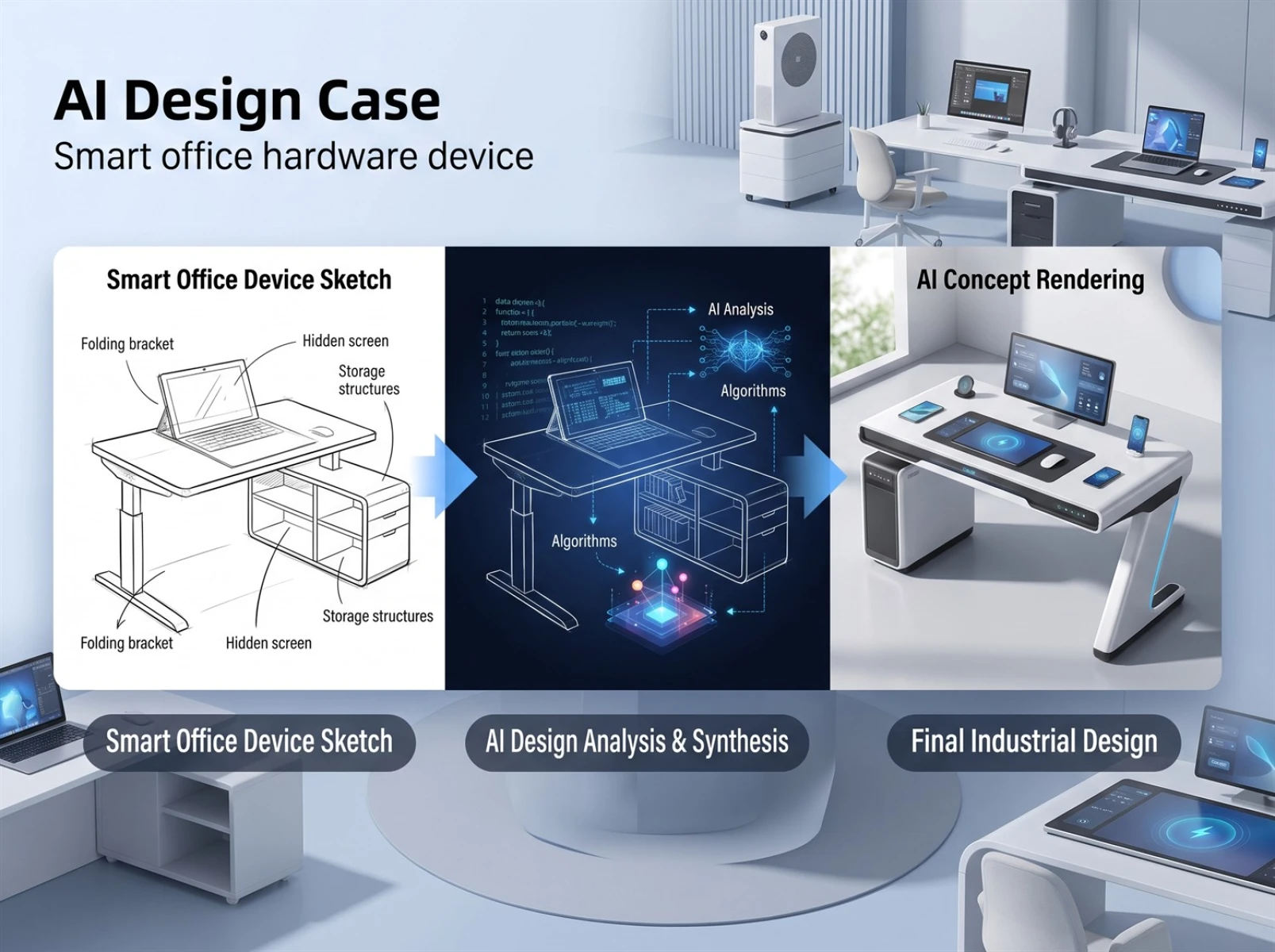
An enterprise planned to launch lightweight office hardware and needed fast concept renderings for initial project review, without occupying designers’ scheduled workloads.
1. Scenario Context
The enterprise intended to develop a new line of lightweight smart office hardware. The product manager needed to verify the feasibility of the product’s form at low cost and rapidly produce visual assets to support preliminary project review.
2. Practical Workflow
The entire process requires no design skills and takes less than 10 minutes in total: Hand-draw a simplified structural sketch → Upload to the platform and select the hardware-specific model → Input scene and style prompts → Generate renderings and fine-tune iterations as needed.
3. Input Parameters
The sketch only outlined core structures: the main desk body, foldable support frame, hidden screen and bottom storage compartment. The text prompts focused on futuristic smart office desk, foldable storage, concealed touch screen, automatic height adjustment, minimalist tech photorealistic rendering, commercial product showcase.
4. Output Deliverables
The platform can batch-generate multiple sets of commercial renderings that accurately replicate the core structures from the sketch, covering front-on, in-use and folded storage viewing angles. The renderings feature standardized proportions and natural lighting that meet industrial design standards, and can act as core visual references for project initiation presentations, requirement documents and user research.
5. Practical Business Value
AI enables rapid verification of product form and scene compatibility, identifying potential design flaws in advance and supplying visual references for subsequent industrial refinement, project approval and market research. It fully illustrates the value of AI tools in product concept validation and AI-aided industrial design.
VI. Frequently Asked Questions
1. Can product managers with no design skills use this AI tool?
Yes. The platform accepts hand-drawn sketches, line art and plain text inputs with no professional design prerequisites. It is ideal for entry-level product managers and entrepreneurs who need to quickly create product renderings.
2. What use cases are suitable for the AI-generated product concept renderings?
High-definition output images serve as critical visual references for solution reviews, user testing, project showcases, cross-team communication and requirement document illustrations. They deliver complete visual materials to support all early-stage product decision-making processes.
3. Will AI-generated product concept renderings replace professional designers?
No. Fast Image AI only helps product managers complete early-stage solution assessment and visual screening. Professional designers are responsible for post-production refined UI design, interaction development and real-world implementation adaptation. The two roles complement each other, and combined use improves overall team efficiency.
VII. Conclusion
AI visualization tools are reshaping traditional product idea validation models. The outdated workflow that relies on designers’ schedules and incurs high trial-and-error costs cannot keep pace with modern rapid iteration demands. AI is automating product design workflows, allowing product teams to validate creative concepts at significantly lower costs. Tools featuring Fast Image AI’s sketch-to-image capability fill the gap where product managers lack early visual asset creation skills, reduce upfront design resource investment and shorten product exploration cycles. Teams seeking a more efficient approach to validating product ideas can leverage Fast Image AI’s sketch conversion function to turn simple ideas into high-definition visual solutions and accelerate the full journey from product concept to market launch.